The Queen’s Bush Settlement
The Queen’s Bush Settlement
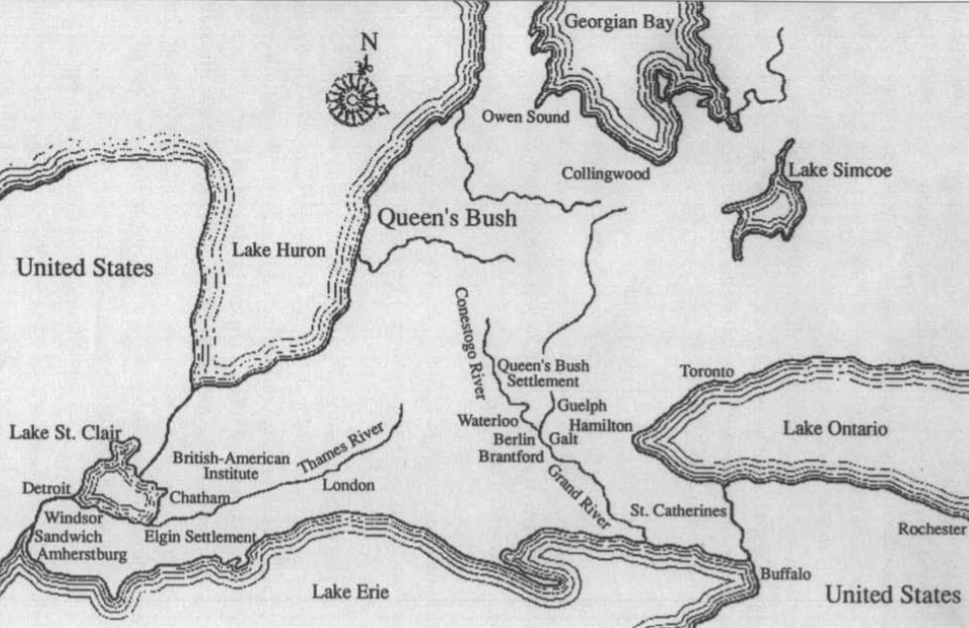
Beginning around 1820, more than 1,500 free and formerly enslaved Black men and women journeyed into the wilderness of the Queen’s Bush—an unsurveyed region north of Waterloo and south of Lake Huron. With little in the way of roads, markets, or government services, they carved homes, farms, churches, and schools from the forest by sheer determination. Missionaries helped establish the Mount Hope and Mount Pleasant schools, and congregations gathered in newly built churches at Yatton, Glen Allan, and Wallenstein. But in the 1840s and ’50s, pressures grew: the land was surveyed and put up for sale, many settlers lacked the funds to purchase what they had developed, and unscrupulous agents coerced or defrauded others into giving up their holdings. By the mid-1850s the exodus had begun; many former settlers moved into towns like Guelph, Owen Sound, Niagara, or Chatham.
Although the Queen’s Bush Settlement was dismantled, its legacy lived on in Brantford’s growing Black population, whose descendants spread across Canada and the United States. Their story links the wilderness of the Queen’s Bush to the roots of Black Brantford—freedom fighters, community builders, and survivors who transformed hardship into hope.