S.R. Drake Memorial Church
S.R. Drake Memorial Church
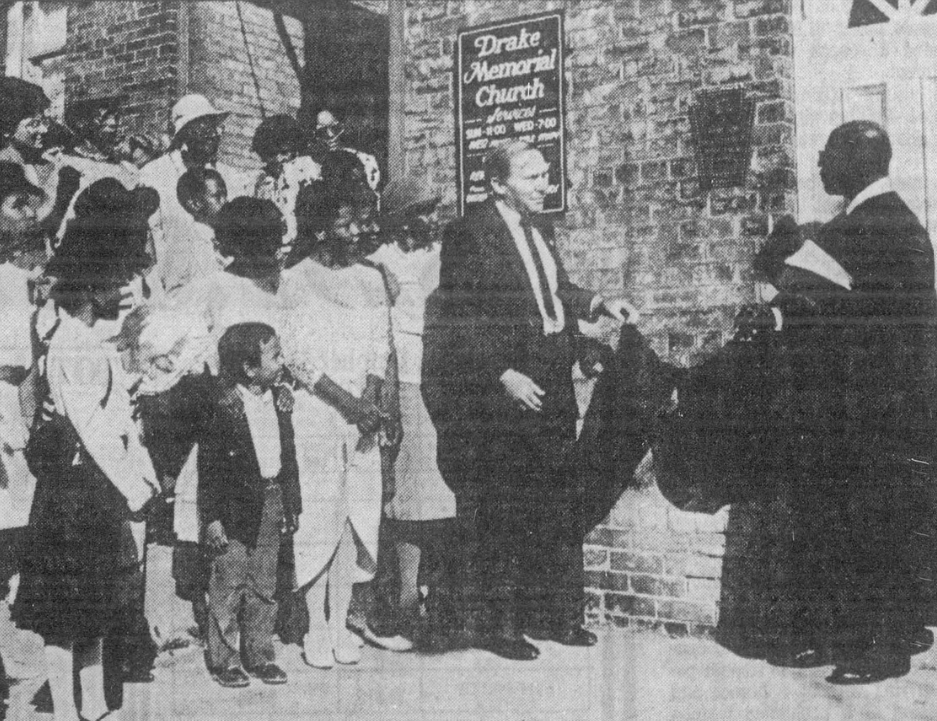
The roots of Brantford’s Black church stretch back to the United States during slavery, as many of its first ministers, patrons, and congregants were born in bondage. Seeking freedom, faith, and community, they fled north to Canada, where the African Methodist Episcopal (AME) Church first appeared in Brantford in 1835. Early services were held in homes, linking local believers to a wider network of AME churches across North America.
In 1856, the Canadian congregations broke ties with their American counterparts and reorganized as the British Methodist Episcopal (BME) Church, affirming loyalty to Britain while shielding members from the threat of American slave catchers. Deeply tied to the Underground Railroad, the church offered both spiritual and practical refuge for Freedom Seekers.
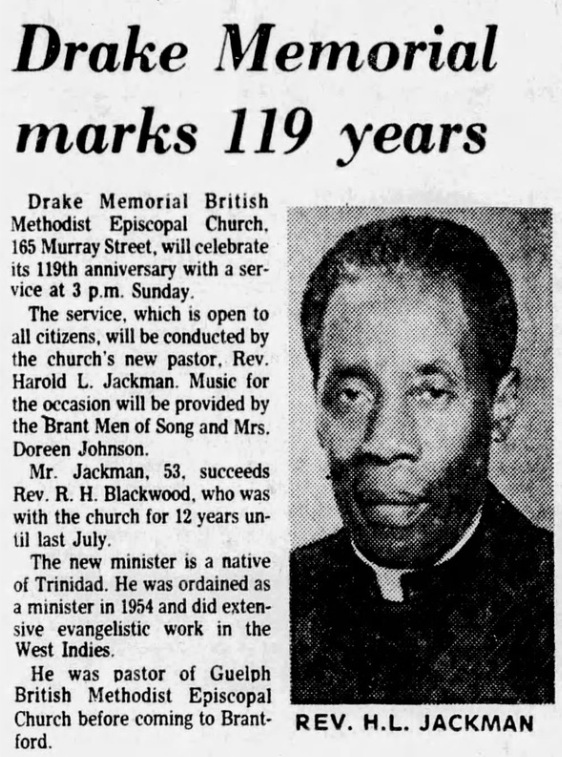
That same year, the O’Banyan family—formerly enslaved themselves—donated land at 165 Murray Street, where the first BME church building was raised. Leadership soon passed to Rev. Walter Hawkins, also a former slave, and by 1896 a permanent yellow brick structure stood proudly on the site. For decades, the congregation endured shifting fortunes: migration of Black families to larger cities, financial strain during the Depression, and dwindling membership after emancipation in the United States. Yet the church persevered, strengthened by community fundraising, outreach, and the steadfast guidance of pastors such as Rev. S.R. Drake, whose name the church took in 1956.