Racism against The Black Community in Brantford
Racism against The Black Community in Brantford
Blackface and Minstrelsy in Brantford
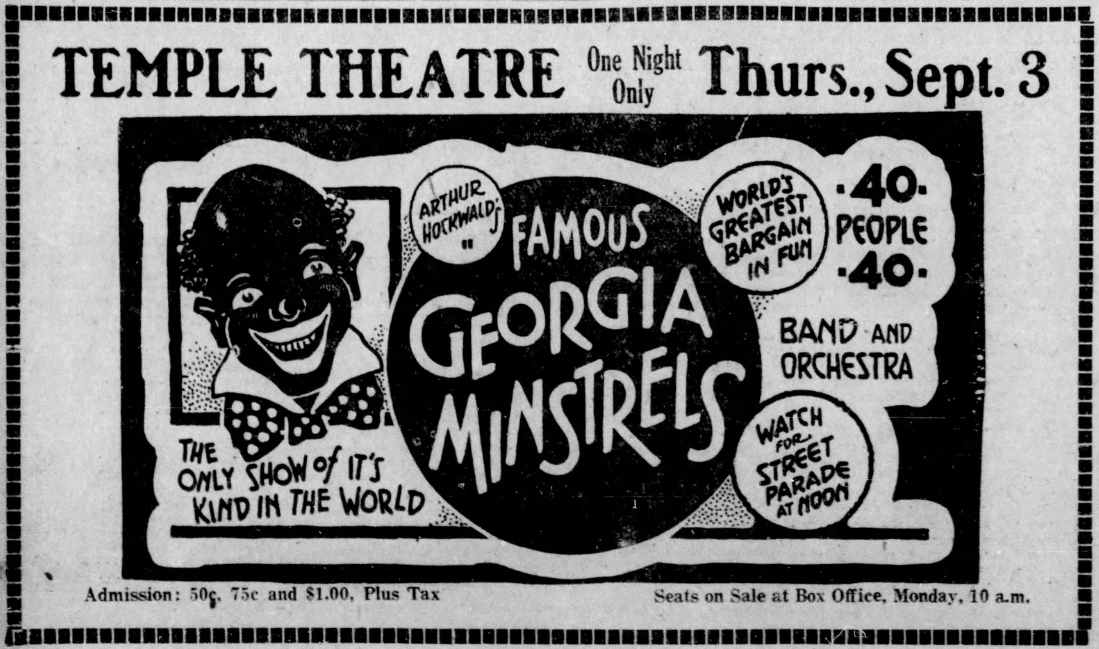
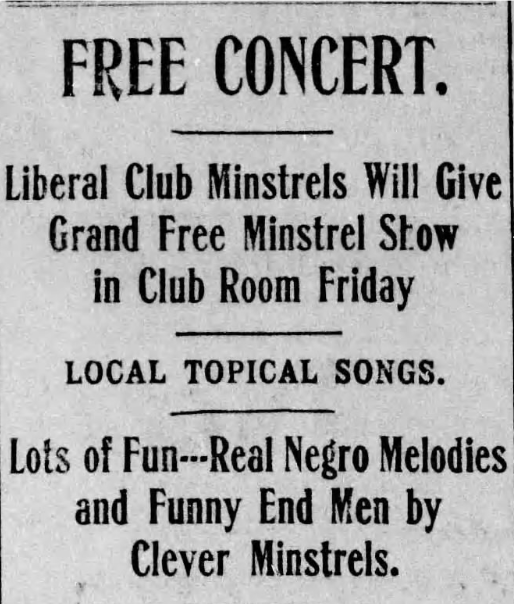
Blackface minstrelsy was one of the most notorious forms of entertainment used to reinforce white supremacy. Performed largely by white actors in burnt-cork makeup, minstrel shows mocked and exaggerated Black speech, music, and mannerisms for the amusement of white audiences. Though strongly associated with the United States, minstrel shows crossed borders by the mid-19th century. By the 1850s, travelling troupes brought this racist entertainment to towns across Canada—including Brantford.
Local venues such as the Kerby House Hotel and Ker’s Music Hall (later the Stratford Opera House) hosted these shows, often preceded by minstrel parades through downtown streets. For Brantford’s Black residents, who lived and worked within sight of these stages, the experience of watching their identities distorted and ridiculed must have been deeply painful. Some later minstrel companies even hired Black performers to claim “authenticity,” but those actors were often forced to darken their skin further with makeup—literally enacting caricatures of themselves to satisfy white audiences. The presence of these shows in Brantford is a reminder that the legacy of minstrelsy, though born in the United States, also took root in Canadian communities.
Blind Tom: The Musical Prodigy
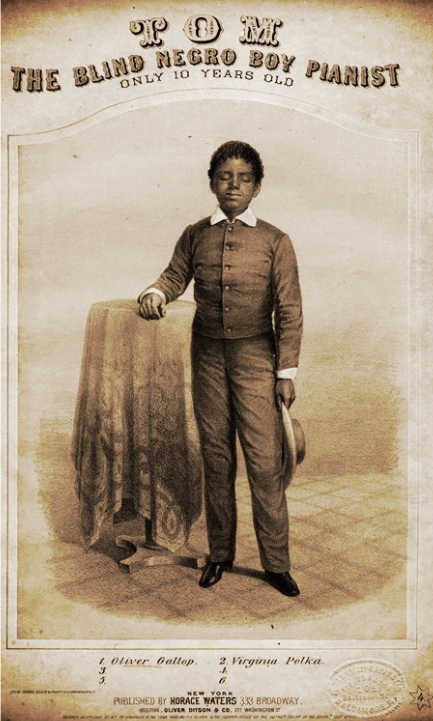
In October 1875, Brantford audiences were invited to witness the talents of “Blind Tom,” billed as a “thorough-bred Negro boy” who astonished crowds with his musical genius. Born enslaved in Georgia in 1849, Thomas Wiggins—later known as Blind Tom—was blind from birth and lived with severe disabilities. Yet from an early age he displayed extraordinary musical ability, able to reproduce complex pieces on the piano after hearing them only once. Promoters capitalized on his talents, presenting him as a “prodigy” across North America and Europe.
In Brantford, advertisements praised his composition The Battle of Manassas, described as “the finest descriptive piece of music ever composed.” Tickets ranged from 25 cents for children to 75 cents for reserved seats, with sales handled at local shops like Bennett Bros. Drug Store. While audiences marveled at his genius, Tom himself remained under the control of white managers who exploited his gifts for profit. His story illustrates both the brilliance of Black artistry and the harsh realities of racial exploitation in the 19th century.
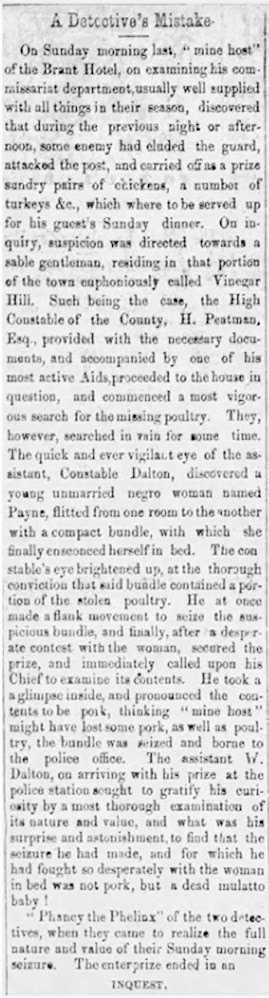
A Detective’s “Mistake”
In 1865, the Brantford Expositor published an article that today reads as chilling evidence of how little Black lives were valued at the time. What was meant as a lighthearted story described a police raid on the home of a young Black woman suspected of stealing poultry for a hotel dinner. When officers seized the bundle she clutched tightly in bed, they expected to find meat. Instead, to their “surprise and astonishment,” they uncovered the body of her newborn baby.
The paper reported the death not with sympathy or outrage, but as a comic blunder—a “mistake” by detectives relieved that no food had been lost. No investigation was launched. No concern was expressed for the grieving mother or her child. Instead, the focus remained on the safety of the town’s Sunday dinner. This episode starkly reveals a time when Black lives, even the most vulnerable, were treated as less valuable than a meal, exposing the racial prejudice woven into Brantford’s past.
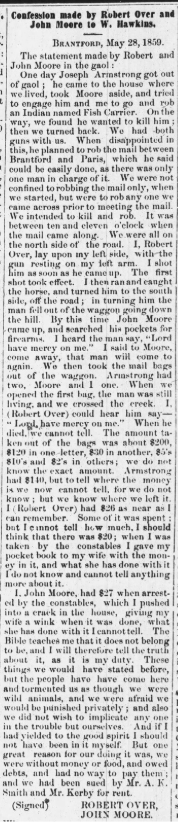
The Public Execution of Robert Over and John Moore
On June 7, 1859, Brantford witnessed its first—and only—public execution. Before a crowd estimated at 8,000 people, two Black men, Robert Over and John Moore, were hanged outside the courthouse at Victoria Park. Both had been convicted of the ambush, robbery, and murder of mail coach driver Launcelot Adams on the Paris Road in April of that year. Newspapers reported the grim spectacle in detail, noting that the gallows was erected specifically for the occasion.
Yet this case also reveals unsettling truths about race and justice in mid-19th century Canada. Over and Moore had confessed that a white accomplice, Joseph Armstrong, helped plan the crime. Armstrong himself testified against them, admitting his involvement, but in exchange for turning “Queen’s evidence,” he escaped the gallows. Instead, he was sentenced to life imprisonment, later pardoned altogether. The decision left many to question whether Over and Moore were executed solely for their crime—or also for the colour of their skin.